War in Ukraine
The war in Ukraine initiated by Russia’s full-scale invasion in February 2022 has become the largest and most fatal military conflict in Europe since World War II. The invasion signified a severe escalation of tensions that had been building since Russia annexed Crimea in 2014. At its core, the conflict began as an opportunistic display of military power by Russia and has now devolved into a prolonged, brutal war that has claimed tens of thousands of lives, led to large civilian displacement, and caused indiscriminate destruction across Ukraine. The United States stepped up as one of Ukraine’s most important allies, bringing military, economic, humanitarian, and diplomatic support to combat Russian military aggression.
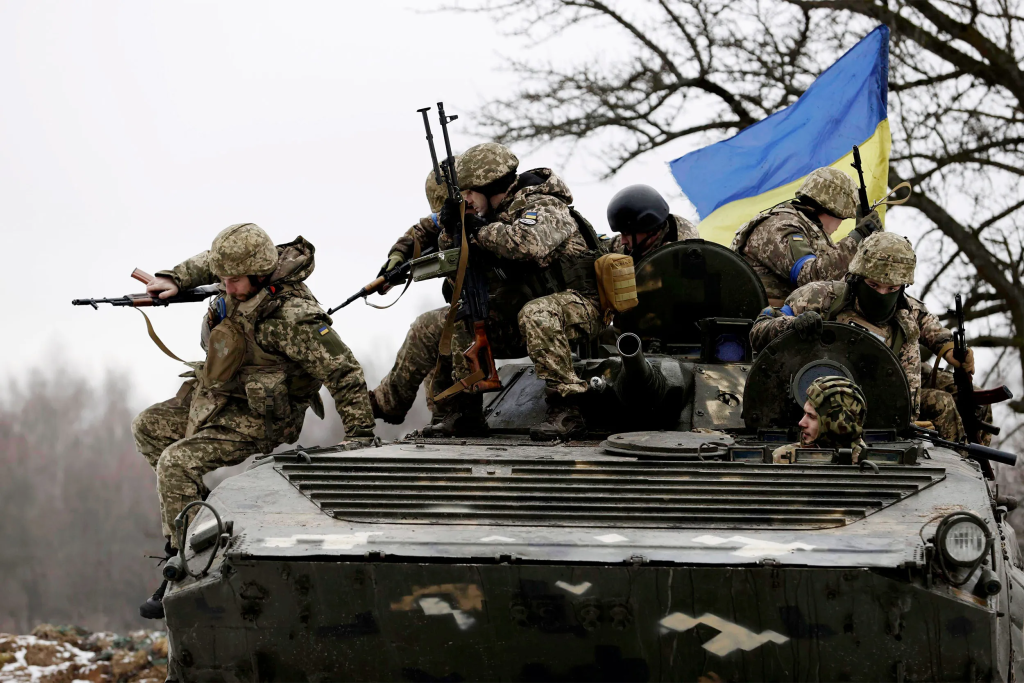
Military assistance was a US priority from the moment Russian forces crossed into Ukraine, helping Ukrainian forces defend their homeland. The US has bolstered the Ukrainian military with advanced weaponry, including Javelin anti-tank missiles, HIMARS rocket launchers, and Patriot air defense systems—all are technologies that will not only aid in repel invading forces from further occupying Ukraine, but more importantly help to protect cities and civilians. Furthermore, the US has converted drones, surveillance equipment, and secure communications systems to help improve battlefield awareness and support Ukrainian intelligence. US forces have also trained Ukrainian troops, exchanged intelligence, and have assisted them with the tactics and concepts of modern warfare, providing them the capacity to adapt to modern and conventional warfare and conduct effective resistance.
The U.S. has provided considerable assistance, both financially and in humanitarian aid, for the purpose of sustaining the Ukrainian government and its people while they are at war. The economic assistance has led to the Ukrainian government being able to pay public sector wages, while keeping the government functioning, and to establish minimal economic stability within its borders in a time of war. Humanitarian assistance has involved emergency food aid, food and shelter for people in temporary refuge, medical supplies for people who were injured or wounded by Russian troops, and general help for 7 million people who were displaced from their home. The U.S. also funded the repair of critical infrastructure, like the electrical grid which has been attacked by Russian missiles during the winter months. The humanitarian assistance is all necessary in order to keep Ukraine’s civil society functioning and to provide some basic ability to live for its citizens.
Diplomatic engagement has led the U.S. to the forefront of the international response to isolate Russia and create support for Ukraine within the international community. Such activities including cutting Russia out of the world economy with sweeping sanctions identifying broad areas of commerce including energy and banking and deterring other countries from participating like Russia. These sanctions are designed to diminish the Russian government’s ability to finance the war, while directly or indirectly coercing the leadership of the country to leave the battlefield and negotiate peace. Near simultaneously the U.S. has engaged internationally with key military alliances like NATO and concurrently through the United Nations to keep members of those organizations and the international community focused and engaged to respond to Russian aggression.
Despite broad support, U.S. policy to Ukraine is not without domestic political challenges. While most provisions of military and economic aid packages have passed with bipartisan support, some political leaders raised concerns about the long-term costs of war, and their strategic objectives. With transition of political leadership in the United States, the tone and scale of support has changed, but the commitment to Ukraine’s defense remains strong.
After nearly four years of war, Ukraine is still fighting back, and in some areas reclaiming lost territory, and American support is a key element in this fight. The war’s outcome will determine Ukraine’s future, and the overall effects of the war will help define global order, either supporting or undermining the principles of sovereignty, democracy and the rule of law. The U.S. position of supporting Ukraine helps to affirm these principles in a fast-changing world.